Floorball – What makes up personality?

personality, psycholgical core, dynamic, consistent, role related behavior

Psychological core – The deepest component in making up our personality includes our values, attitudes, interests and motives. This is “the real you”, this part also include our beliefs about our selves and self confidence.

Typical Responses – The ways we adjust to the environment, or how we most likely will respond in different situations, happy, shy, open, want to be in the center of attention etc. Sometimes people can be wrongly judged on their typical responses, if you only see a person once or the first time in a team and that person is “shy”, he/she is easily put in to the “shy” box, but it might just be the current situation that created the typical response, it’s not the way this person usually acts.

Role related behavior – This behavior is the most changeable aspect of our personality. Different situations require different roles, during the day you might switch between some of these roles, football coach, dad/mum, husband/wife, employee, friend etc.

Knowing your floorball players will help you in your coach role and in coaching the team and the individuals. You know the basics how your players are and probably will act in certain situations. Knowing your players well, will also help you to understand their “driving force”. Motives may though change over time, so you need to continue to follow up and understand why your players are there, to be able to motivate them in a right way.

Close realtionships

There is a statement that goes, the deeper your relationships, the stronger your leadership. True? I don’t have the right answer, but if you look at José Mourinho it can be true.

Materazzi might not be a “Firts Teamer”, but this video shows how valued he was for Mourinho and the team, even on the bench.

If you study José Mourinhos leadership and relation to the players, it’s sometimes described as father – son relation, or that he is the big brother the players are looking up to. If you have that kind of a close relation, he probably knows his players quite good. Of course you can know your players well without having a father – son relation, and it will work well!

“Compared to Rafa Benitez, Mourinho had more close relation to the players and was more open and humoristic” /Javier Zanetti

2-2-1 Floorball Set up / System

2-2-1 Normal or Offensive Floorball Set up / System

2-2-1 Salibandy normaali tai hyökkäävä asetelma

2-2-1 is in my mind very easy and a simple set to use in floorball. P1 is the key on steering the opponents attacks towards one border.

You can “visually” be balanced in 2-2-1, meaning how the other teams see your positioning. But you can decide by your forecheck that you will try to force all the breakouts to just one side, so you start neutral, but you will close one side by your running and positioning.

2-2-1 Floorball Defensive Set up / System

2-2-1 Salibandy Puolustava Asetelma

2-2-1 Floorball Set up / System, checking or steering to left

2-2-1 Salibandy oikealta ohjaus vasemmalle

By deciding to move players forward on one side (right in example), you will force the other team to make their breakouts on one side, this way you can limit at least some breakout options for the opposite floorball team. It’s a bit risky but at least you will be aware of it.

By strengthening one side or almost closing it, you can also confuse the other team, since many of the set ups are very balanced. Of course you should try force the other team to play up on their weak side or on your own strong side.

2-2-1 Floorball Set up / System, checking or steering to right

2-2-1 Salibandy vasemmalta ohjaus oikealle

Floorball – The power of three letters – WHY

Think of a situation where you did not have the true energy or motivation to do something. Do you have the picture and the feeling?

I can use one of my examples, it’s of course from the sports. I played football and had my position to the right on the midfield. On some of the drills on our football practices I was supposed run up on the border and then make turn and run in towards the middle, and then the defenseman would pass the ball on the same side I was running from, to a forward that was meeting up the ball.

I found it totally unnecessary and useless doing that and therefore asked the coach, why I’m running the way I were, I just got the answer that I needed to do so, it was part of the drill… Do you find it exciting?

Ok I did not have José Mourinho as the head coach and I wasn’t David Beckham and as you see I didn’t have the opportunity either.

Floorball youth skills drills and practices

Explaining Why

What if the coach would have explained it this way? You need to run on the border and turn into the middle to get their left midfielder to follow you to the centre, by doing this you will create some space at the border, since their midfielder will follow you, and therefore we can pass the ball to our own forward in that space you have created through your run, and from there we can start our next move, so you are making an important run to create space for your teammate and for us to make the next move.

So what was the secret? WHY, you are doing something. Can you see the difference in the motivation and energy level of a young player?

Mourinho, do he need to explain why?

José Mourinho is of course not facing this simple problem, but he will still need to explain WHY, many, many times to his players. Sometimes it’s even harder to get your experienced players trying to do some new things, because some of them will be “yesbuts”, yes but, we are used to do it this way, and then you really need to explain WHY, they need to do things differently or your way.

“Yesbut we are different”
“Yesbut we have already tried it in the past”
“Yesbut our people don’t like it”
“Yesbut but my responsibility will change”
“Yesbut it will destroy our game”
“Yesbut it does not fit our structure”
“Yesbut our fans do not need it”
“Yesbut we are obliged to …”

God bless the whynotters!
They dare to dream…. and act, thereby achieving what others see as unachievable.

Why is also important in general terms, for why you are playing floorball, why are you here in this floorball team? You can also ask that question to yourself, why are you coaching, why are you a floorball coach?

Non-professional floorball players (main reasons)

Really young floorball player: Why are you playing?
–         I want to be a floorball pro
–         My parents want me to play
–         I have my best friend David here

Young floorball player: Why are you playing?
–         I want to be a floorball pro or at least try to earn some money on it
–         I have my friends here

Semi-professional Floorball player: Why are you playing?
–         I get some extra money
–         I like the chat in the locker room
–         I just like it, it’s part of me
–         It keeps me in shape
–         It’s nice to say you are a floorball player, to the girls in the bar
–         I like floorball

Professional floorball players (main reasons)
–         I earn my living
–         I want to win the league/big titles
–         I want to be a better football player
–         I like the chat in the locker room
–         I just like it, it’s part of me
–         I like floorball
–         I want to win (game, league, tournament)

“I told Adrian Mutu, you are already a rich boy, you won a lot of money, you are still in a big contract. So no problem with your future about money, no problem about prestige in your home country. When you go back to Romania you will be one of the kings. But five years after you leave football nobody remembers you. Only if you do big things. This is what makes history.”  /José Mourinho
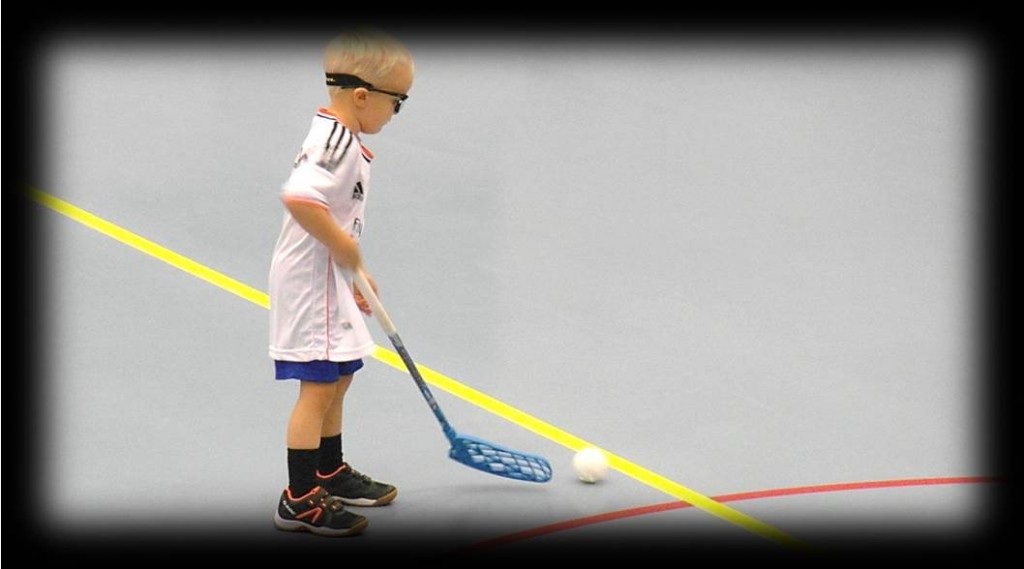
Youth floorball practices and drills

When you are coaching floorball on “lower” levels you need to understand why your players are there, to be able to pull the right strings, your floorball players will have many reasons to why they want to play floorball, have you asked them?

Why are your Floorball players there?

What about if you are José Mourinho? Somehow there is no difference, you still need to know why, why are your players there, the main reason is not just that they have a contract with the team (in that case they probably already are sitting on the bench) or that they want to earn a lot of money, because they already are. So what is it then?

That’s a question I can not give you the right answer on, you need to know your players to understand, why they continue their career and what motivates them, and I mean each and one of them, because you will not get the same answer from each and one of the players!

Floorball Leadership eBook >>

1-3-1 Floorball Set up / System

1-3-1 Floorball normal or offensive set up / starting positions

1-3-1 Salibandy Normaali tai Hyökkäävä Asetelma

1-3-1 has received a lot of criticism for being a defensive set up, at least in hockey. I would not say that, it depends on how you are using the system.

1-3-1 Defensive Floorball Set up / System

1-3-1 Salibandy Puolustava Asetelma

One really defensive example from hockey, Tampa Bay Lightning in NHL (blue jerseys)

1-3-1 Tampa Bay Lightning NHL - Floorball example

Philadelphia Flyers even stopped playing for a while and nothing happened… Use 1-3-1 in an offensive way and it will be a fantastic floorball set up, at least in my mind.

Floorball 2-1-2 in practice

2-1-2 in Floorball

2-1-2 set up / system in floorball visualized in practice (division 1 in Sweden).

Read more or see theoretical pictures of 2-1-2 set up / System in floorball >>