This part is about predicting a floorball teams performance and possibility to deliver results. The Teamwork part consist of three blocks, capacity + team spirit – co-operational losses = team performance.
In capacity you can put in:
Practice facilities
The amount of football practices
Practice length
How you use the practice time (quality of the practice)
Training equipment
Competence
Experience
Support round the team (ass. Coaches, goalie trainers, material management, doctors)
Strengthen resources and skills
Build up your resources and the individual skills of your players. A team with individual competent players will obviously have better opportunities compared with less skilled teams. In the team capacity you include physics, condition, fitness, speed, strength, body size, attitude, motivation, mental or psychological skills and coordination skills. Other categories are age, experience, education, gender and social status.
Support round the team like assistant coaches, goalkeeping coaches, fitness trainers, physics, masseurs, doctors, sports scientist, sport psychologist etc.
Manchester United for example has, a full time doctor, five physios, a fitness coach, a weights coach, an optometrist…
“Captains and coaches from all over the world considered that Mourinho got the best results with less resources than their rivals, but he has been rude and with no education in his behaviour to achieve his objectives.” /Franz Beckenbauer
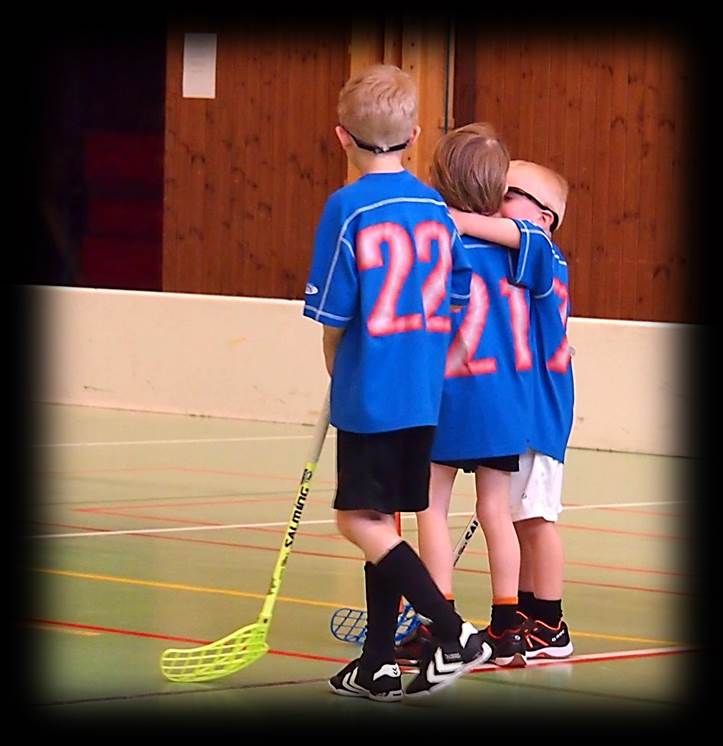
Team-spirit can be described in many ways, here some keywords:
How well we know each other
Striving together towards a common goal
Honesty
Loyalty
Positivity
Humility
Showing that you are ready to do things for others (acting)
Solving problems together
Good communication
Supporting each other
Ethics
Moral
1+1=3
Co-operational losses can be described as the opposite to team-spirit, but also as more practical losses during a practice or a game:
Lack of…
How you use the practice time (quality of the practice)
Equipment
Competence
Experience
Support round the team (ass. Coaches, goalie trainers)
Common goals
Honesty
Loyalty
Positivity
Humility
Solving problems together
Communication
Supporting each other
Ethics
Moral
Norms
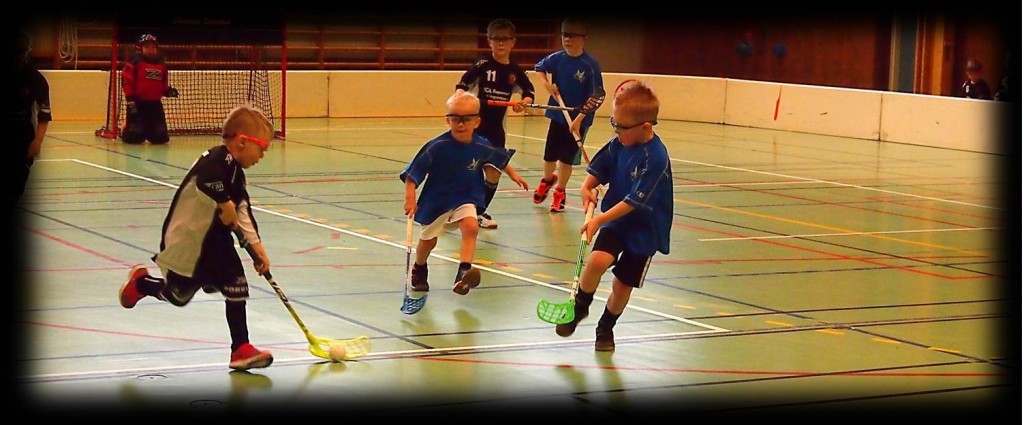
Co-operational losses can also be:
Undefined roles
Bad passes
Wrong positioning
Bad performance/errors during the drills on your practice
Unclear directives
We and them thinking or me and you (in a negative way)
Egoistic behavior (in a negative way)
Smooth co-operation
Get the different groups in your team to work together smoothly, through for example the team set up (like e.g. 2-2-1) and with synchronizing defense and forwards. The composal of the floorball team is important in avoiding co-operational losses. To practice with the same speed and intensity as in a floorball game is obvious for every coach. In avoiding the social loafing part, you need to have clear roles, responsibilities and norms in your floorball team.
Ringelmann study – Tug of war
One of the earliest studies in the area of co-operational losses and social loafing was done by Ringelmann. Ringelmann let people participate in a “tug of war”. He started to measure their individual capacity, which was defined as 100%. Then they did the exercise in pairs, with three people, four people and so on. The result showed that in pairs they reached 93% of their capacity, three people reached 85% of their individual capacity, 77% in a team of four and only 49% in a team of eight people.
The tendency that peoples effort decreases in a larger group is sometimes called the “Ringelmann effect”, he’s study is supported with more recent studies (Ingham, Levinger, Graves & Peckham, 1974) This could explain why some star players sometimes are invisible during a game, they are waiting for the other players to perform and not counting their own low performance will be visible. It can also be the opposite, many of the team members take a step back and wait for the star player to win the game for the team. This type of social loafing will appear on all levels, in all ages and regardless of gender.
Social loafing as a result from a red card?
Social loafing can also be visible after a red card in a football game, the team with all players left feel they have an advantage and instead of continuing, they take a step back and feel comfortable, social loafing and the team with only ten players might feel they need to take greater responsibility and therefore the game might continue look like they play with even strength.
With this prerequisites you should try to improve you capacity and team spirit and to reduce the co-operational losses.
Easiest part to copy between floorball teams
The easiest part to improve or at least get the right prerequisites from the beginning in big European football teams is probably the capacity block, and now I’m talking about really big teams like Manchester United, Manchester City, Chelsea, Inter, Real Madrid, Bayern Munich etc. You can buy the players “you want”, you have everything in place round the team, and this is the part that’s also easiest to “copy” between the teams.
But unlimited money will not grant you success, there are many failures back in time with clubs getting a lot of money and unlimited resources to buy players, but the victories aren’t still coming and then you have problems with other parts in this football leadership model, like team-spirit, co-operational losses, motivation or common goals…
I don’t think José Mourinho had the best team regarding capacity in Inter 2010, of course he had world-class players, but not the best indivual players, some other teams had stronger names on the paper (e.g. Barcelona), but he mastered the other parts in leading the team in a briljant way. He was able to motivate the players, build up a strong team-spirit and reduce the co-operational losses and the result was there, three titles!
“It is like having a blanket that is too small for the bed. You pull the blanket up to keep your chest warm and your feet stick out. I cannot buy a bigger blanket becuase the supermarket is closed. But I am content because the blanket is cashmere. It is no ordinary blanket.”
“We are on top at the moment but not because of the club’s financial power. We are in contention for a lot of trophies because of my hard work.” José Mourinho